
A few years back, a business owner called me, all excited about a social media post of his that went viral overnight. It got thousands of shares and hundreds of comments. Website traffic jumped. His team celebrated what felt like a big breakthrough. After months of hard work, it finally seemed like their turn.
For a few days, everyone was talking about the business. But just as quickly as the attention came, it faded away.
A few weeks later, he called us again. This time, he sounded confused. The traffic was gone, engagement was back to normal, and sales had hardly changed.
Despondent, he asked: “What happened?”
The answer was simple. Nothing had really changed for his business; while the post had gone viral, his had not.
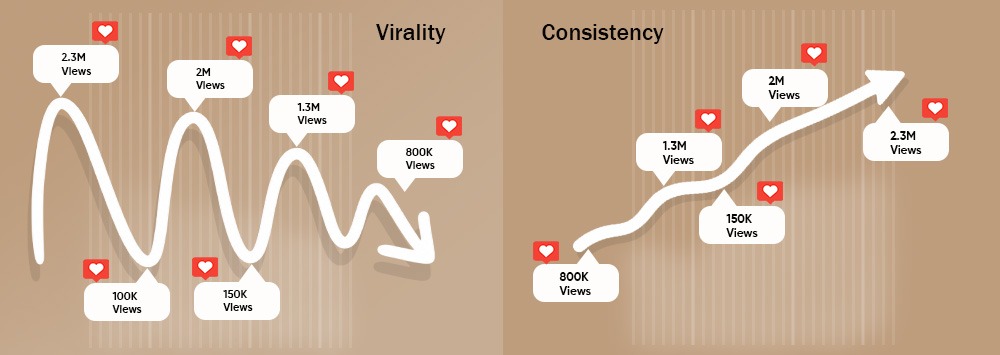
That conversation stuck with us because it brings to the fore one of the biggest misunderstandings in marketing today. We focus on moments: the viral reel, the trending post, the campaign everyone shares. We celebrate sudden attention, but we rarely talk about what really builds strong brands.
The truth is that most enduring businesses are not built through viral moments. They are built through consistent ones.
Virality is exciting because it seems fast. It makes us think growth can happen overnight. One great idea, a well-timed post, or a lucky break, and suddenly things change. This story is dramatic, so it makes great headlines and LinkedIn posts.
But if you look at brands you admire, you’ll see a different story.
Take Old Spice, for example. The iconic “The Man Your Man Could Smell Like” campaign is often held up as one of the greatest examples of viral marketing. Millions watched it. Millions shared it. It generated conversations around the world and transformed the brand’s image almost overnight.
But many people miss that the campaign didn’t come out of nowhere, and it didn’t end after just one ad.
Old Spice spent decades building its brand. It set up distribution, grew customer awareness, and built its marketing long before the viral video. The campaign was impressive, but it rested on years of steady work.
But another significant thing about the campaign was that they did not stop after one campaign; they engaged their audience and, based on their feedback, kept going even as views rose. The company made more content, talked with audiences, and kept the campaign going. The viral moment got attention, but it was the consistency that turned it into real results.
This is the part that most businesses miss or overlook. We notice the spark, but forget what keeps it going.
On the other hand, many brands get a short burst of internet fame and think it means lasting success. Every day, businesses celebrate a post that suddenly reaches millions. Followers jump, notifications pour in, and website traffic spikes.
For a moment, it feels like everything has changed. Then reality returns.
The audience moves on. Engagement drops. The algorithm picks something new. The numbers go back to normal, and businesses are left wondering where everyone went.
It’s a simple case of getting attention without trust, getting the chance to develop.
A viral post can help people find your brand, but it can’t build a relationship by itself. Relationships grow from repeated interactions, showing up often, and delivering value again and again. Over time, people start to know your name, trust your skills, and choose you.
In many ways, brands are like people. Think about the people you trust most—a mentor, a colleague, or a friend. You probably trust them because they’ve been reliable over time, not because of one big thing they did years ago.
Trust is rarely built in a moment. It is built through consistency over time.
The same principle applies to business.
Customers rarely decide after seeing just one piece of content. Instead, they come across your brand many times. They might read an article, see a post, hear your name, visit your website, check with friends, or find another tip you shared.
Each time someone interacts with your brand, it adds a little more trust. Over time, these moments add up.
So when it’s time to make a purchase, your brand feels familiar, trustworthy, and reliable.
This happens not because you went viral, but because you kept showing up.
Consistency is tough because results take time. Virality gives instant rewards, but consistency needs patience. You might post for months before seeing results, share ideas that get little response, and wonder if anyone is even watching.
What you don’t see is that consistency works behind the scenes before you notice any results.
A founder who seems big on LinkedIn today probably spent years posting before anyone noticed. A podcast that looks like a hit likely has hundreds of episodes. A company at the top of search results probably spent years creating content and building its website.
We see the results, but we rarely see all the hard work behind them.
That’s why consistency can feel boring. It doesn’t have the excitement of going viral, no overnight success, no big spikes, no sudden attention.
Instead, it’s about simply showing up, over and over again.
But most things that matter in life are built this way; strong relationships, good careers, healthy habits, and successful businesses all come from steady effort over time.
Marketing is no exception.
In fact, it’s often consistency that leads to virality. Brands that seem lucky are usually the ones that have spent years learning about their audience, refining their message, and creating content. When the chance comes, they’re ready.
What looks like luck is often just preparation meeting opportunity.
At KERTUS, we’ve worked with businesses at all stages. One lesson stands out: the brands that succeed aren’t always the most creative, the loudest, or the ones chasing every trend.
The brands that last aren’t ones driven by occasional bursts of brilliance. They’re built by people who choose to create content, day after day, even when the response is lukewarm. They use every article, every conversation, and every piece of content as tools to earn someone’s trust.
Over time, that consistency builds trust.
Every article builds credibility. Every customer story adds trust. Every interaction makes your brand more familiar. Each piece of content is another part of your foundation.
Eventually, people stop asking who you are and start asking how they can work with you.
That’s the difference between getting attention and building a reputation.
Virality might get you attention for a day, but consistency builds a reputation that lasts.
In a world focused on high visibility, the best strategy isn’t being the loudest. It’s being the voice people hear often enough to trust.
Viral moments might make headlines, but consistency is what builds a legacy.